


Economic diplomacy is now an essential lever for African states seeking to turn international relations into concrete growth opportunities. In a context marked by global competition for capital and the need to diversify economies, the ability to attract sustainable productive investment has become a major strategic issue.
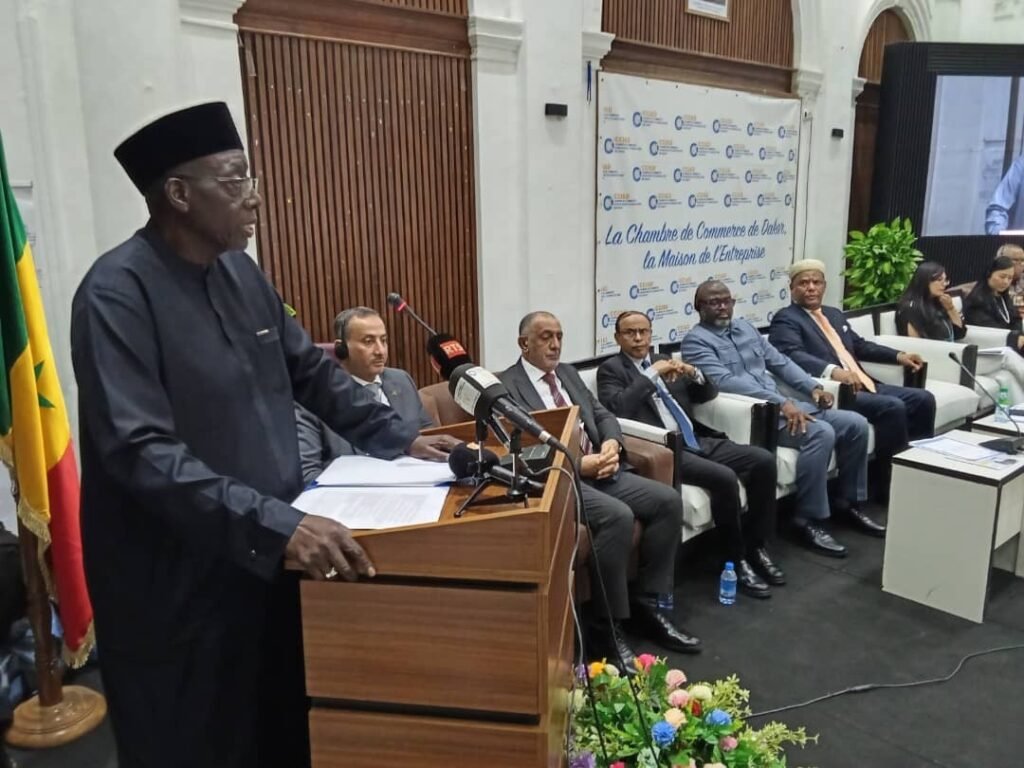
It is in this dynamic that the major economic debate organized by the Dakar Chamber of Commerce, Industry, and Agriculture (CCIAD) took place, bringing together diplomats and economic stakeholders around a central question: how can diplomacy become a genuine instrument of development?
Speaking on the theme “Economic Diplomacy: Transforming International Relations into Growth Opportunities,” Morocco’s ambassador to Senegal, Hassan Naciri, presented his country’s experience, built on a long-term strategy.
According to him, Morocco’s attractiveness relies less on financial incentives than on policy coherence, a predictable legal framework, quality infrastructure, trade openness, and training adapted to the needs of the productive sector. “Attractiveness cannot be decreed. It is built over time,” he said.
The figures confirm this approach: foreign direct investment in Morocco reached $3.34 billion in 2025, up 91% year-on-year, according to UNCTAD.
This performance is based in particular on the automotive and aeronautics sectors, whose exports reached approximately 157.6 billion and 26.4 billion dirhams respectively in 2024.
For Hassan Naciri, the challenge is not limited to attracting capital: the true performance of an investment is measured by its contribution to employment, skills transfer, and the integration of local businesses. This approach aligns with Senegal’s ambitions under its 2050 development strategy.
The diplomat also highlighted the complementarities between the two economies—agro-industry, fishing, pharmaceuticals, renewable energy, building materials, financial services, and training—and recalled that the 15th Senegal-Morocco Joint Commission had resulted in 17 agreements. The next step is to turn these commitments into cross-investment projects and shared value chains, particularly in the context of the AfCFTA. Senegal would benefit from drawing inspiration from this approach.




Laisser un commentaire