


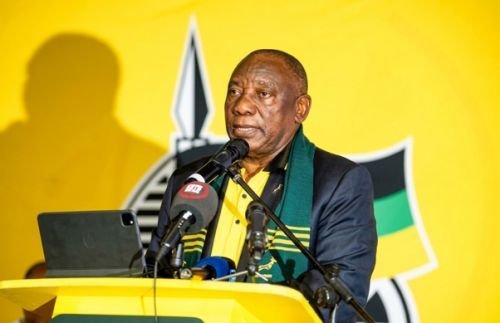
This Wednesday, November 4, 2026, South Africa’s municipal elections are shaping up as a pivotal moment for the African National Congress. The party that has governed since the end of apartheid, weakened by plummeting popularity and without a parliamentary majority since 2024, could suffer another defeat. The vote will serve as a barometer for its ambitions to stage a comeback ahead of the 2029 general elections.
President Cyril Ramaphosa’s party enters the electoral contest in a delicate position, with several opinion polls predicting a further erosion of its support.
An Ipsos study released in late October shows historically low backing, while other polls cited by the Daily Maverick put its voting intentions between 22% and 32%.
The forecasts confirm a long-term trend that began more than a decade ago. After peaking at nearly 70% in 2004, the ANC fell from 62.15% in 2014 to 57.50% in 2019, before dropping to 40.2% in 2024.
That last election marked a turning point: for the first time since the end of apartheid, the party lost its absolute majority in Parliament, forcing Cyril Ramaphosa to build a government of national unity with several formations, including its main rival, the Democratic Alliance.
At the local level, the first signs of this decline appeared as early as 2021, with 45.6% of the vote in the municipal elections.
The electoral punishment cannot be explained by the wear and tear of power alone.
In many municipalities, failing public services are fueling citizens’ anger: water shortages, power cuts, degraded roads and dysfunctional sanitation.
In one of the world’s most unequal countries, unemployment exceeded 33% in the second quarter of 2026, reaching 47.4% among 15- to 34-year-olds.
These difficulties are weakening the ANC in major metropolitan areas, where it faces competition from the DA, Jacob Zuma’s uMkhonto weSizwe Party, the Economic Freedom Fighters and other emerging formations.
In Johannesburg, the DA would win more than 30% of voting intentions against just over 20% for the ANC, according to Reuters. In Tshwane, which includes Pretoria, the DA would also lead the ruling party.
The threat is even sharper in eThekwini, the Durban metropolitan area, where Zuma’s MKP could secure between 40% and 50% of the vote, against 10% to 15% for the ANC.
Even if it remains the leading party, the ANC may have to multiply coalitions to govern certain municipalities, deepening its dependence on political partners.
Beyond local issues, the election is a full-scale test three years ahead of the 2029 general elections, which will determine the composition of the Parliament responsible for electing the next president.
A further setback would strengthen doubts about the party’s ability to regain its majority and inflame internal tensions over its leadership and strategy in the post-Ramaphosa era. Conversely, a better-than-expected score would allow it to argue for a stabilization of its electorate.
The stakes therefore go beyond the number of municipalities won. After three decades of national dominance, the ANC must prove it remains capable of mobilizing enough voters to stay the country’s central political force.
The verdict from the ballot box will tell whether its historic decline can be halted or whether it heralds a lasting reshaping of South Africa’s political landscape.






Laisser un commentaire